 History Globe
town or village
Susa
- Today Shush
Events
- c. 1158 BCShutruk-Nahhunte of Elam carries Naram-Sin's stele from Sippar to Susa
- c. 646 BCAshurbanipal sacks Susa
In ancient writers
- Herodotus, Histories 5.52–54 — The Royal Road from Sardis ends at Susa, the city called Memnonian, on the navigable river Choaspes: 111 stages and about three months of walking.
- Strabo, Geography 15.3.2 — Cyrus and the Persians made Susa the royal seat because it lay nearer Babylon and the heart of the empire; the oblong city was 120 stades around, its citadel the Memnonium, said to be founded by Tithonus, father of Memnon.
History
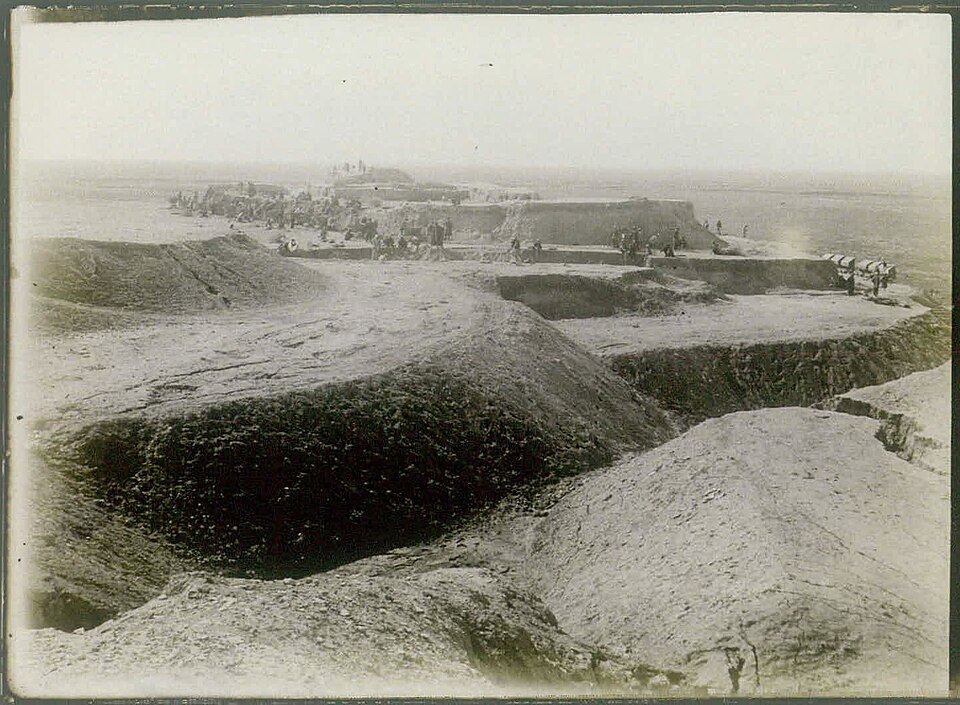
Susa lay in the plain of Khuzestan in south-western Iran, between the Karkheh and Dez rivers, at the modern town of Shush. It was founded by about 4000 BC on a mound later called the Acropolis, and for much of the next three thousand years it was one of the chief cities of Elam, though at times under Mesopotamian rule. The Elamite king Shutruk-Nahhunte carried Mesopotamian monuments home to it as booty in the twelfth century BC, and the mission of Jacques de Morgan found among them, in 1901–1902, the stele bearing the laws of Hammurabi.
About 646 BC the Assyrian king Ashurbanipal took Susa, plundered its treasuries, destroyed its ziggurat and carried off its gods and the bones of the kings of Elam. The city rose again under the Persians: Darius I (522–486 BC) made it a royal residence and built a palace there, recording that cedar was brought from Lebanon, gold from Sardis and Bactria and ivory from Kush and India.
In the Bible Susa is Shushan the palace. In a vision Daniel saw himself in Shushan by the river Ulai, the Eulaeus of the Greeks, and there saw the ram and the he-goat. Nehemiah was in Shushan in the twentieth year of Artaxerxes when he heard of the ruin of Jerusalem's walls, and there he served the king wine. The Book of Esther is set at the court of Ahasuerus in Shushan; he is usually identified with Xerxes I.
In 331 BC Susa surrendered to Alexander the Great, who found in it fifty thousand talents, and in 324 BC he held there the mass wedding of his officers to Persian and Median noblewomen. Under the Seleucids it became a Greek city, Seleucia on the Eulaeus. It lived on under the Parthian and Sasanian kings, though it never regained its old place.
Scripture: Dan 8:1–5; Neh 1:1–3; Neh 2:1; Esth 1:1–2
Sources
- Ashurbanipal's Rassam Cylinder (RINAP 5, Ashurbanipal 11) v 126 - vi 100
- Darius I, foundation charter from Susa (DSf)
- Arrian, Anabasis 3.16.6-8; 7.4.4-8
- Louvre, Code of Hammurabi (Sb 8), excavated at Susa by J. de Morgan's mission, 1901-1902
- D. T. Potts, The Archaeology of Elam (2nd ed., 2016)
- J. Perrot (ed.), The Palace of Darius at Susa (2013)
Checked against its sources; not yet read by a historian.
Verses (20)
- Ezra 4:9
- Then wrote Rehum the chancellor, and Shimshai the scribe, and the rest of their companions; the Dinaites, the Apharsathchites, the Tarpelites, the Apharsites, the Archevites, the Babylonians, the Susanchites, the Dehavites, and the Elamites,
- Neh 1:1
- The words of Nehemiah the son of Hachaliah. And it came to pass in the month Chisleu, in the twentieth year, as I was in Shushan the palace,
- Esth 1:2
- That in those days, when the king Ahasuerus sat on the throne of his kingdom, which was in Shushan the palace,
- Esth 1:5
- And when these days were expired, the king made a feast unto all the people that were present in Shushan the palace, both unto great and small, seven days, in the court of the garden of the king’s palace;
- Esth 2:3
- And let the king appoint officers in all the provinces of his kingdom, that they may gather together all the fair young virgins unto Shushan the palace, to the house of the women, unto the custody of Hege the king’s chamberlain, keeper of the women; and let their things for purification be given them:
- Esth 2:5
- Now in Shushan the palace there was a certain Jew, whose name was Mordecai, the son of Jair, the son of Shimei, the son of Kish, a Benjamite;
- Esth 2:8
- So it came to pass, when the king’s commandment and his decree was heard, and when many maidens were gathered together unto Shushan the palace, to the custody of Hegai, that Esther was brought also unto the king’s house, to the custody of Hegai, keeper of the women.
- Esth 3:15
- The posts went out, being hastened by the king’s commandment, and the decree was given in Shushan the palace. And the king and Haman sat down to drink; but the city Shushan was perplexed.
- Esth 4:8
- Also he gave him the copy of the writing of the decree that was given at Shushan to destroy them, to shew it unto Esther, and to declare it unto her, and to charge her that she should go in unto the king, to make supplication unto him, and to make request before him for her people.
- Esth 4:16
- Go, gather together all the Jews that are present in Shushan, and fast ye for me, and neither eat nor drink three days, night or day: I also and my maidens will fast likewise; and so will I go in unto the king, which is not according to the law: and if I perish, I perish.
- Esth 8:14
- So the posts that rode upon mules and camels went out, being hastened and pressed on by the king’s commandment. And the decree was given at Shushan the palace.
- Esth 8:15
- And Mordecai went out from the presence of the king in royal apparel of blue and white, and with a great crown of gold, and with a garment of fine linen and purple: and the city of Shushan rejoiced and was glad.
- Esth 9:6
- And in Shushan the palace the Jews slew and destroyed five hundred men.
- Esth 9:11
- On that day the number of those that were slain in Shushan the palace was brought before the king.
- Esth 9:12
- And the king said unto Esther the queen, The Jews have slain and destroyed five hundred men in Shushan the palace, and the ten sons of Haman; what have they done in the rest of the king’s provinces? now what is thy petition? and it shall be granted thee: or what is thy request further? and it shall be done.
- Esth 9:13
- Then said Esther, If it please the king, let it be granted to the Jews which are in Shushan to do to morrow also according unto this day’s decree, and let Haman’s ten sons be hanged upon the gallows.
- Esth 9:14
- And the king commanded it so to be done: and the decree was given at Shushan; and they hanged Haman’s ten sons.
- Esth 9:15
- For the Jews that were in Shushan gathered themselves together on the fourteenth day also of the month Adar, and slew three hundred men at Shushan; but on the prey they laid not their hand.
- Esth 9:18
- But the Jews that were at Shushan assembled together on the thirteenth day thereof, and on the fourteenth thereof; and on the fifteenth day of the same they rested, and made it a day of feasting and gladness.
- Dan 8:2
- And I saw in a vision; and it came to pass, when I saw, that I was at Shushan in the palace, which is in the province of Elam; and I saw in a vision, and I was by the river of Ulai.
King James Version