 History Globe
town or village
Bethany
- Today Al Eizariya
Questions
History
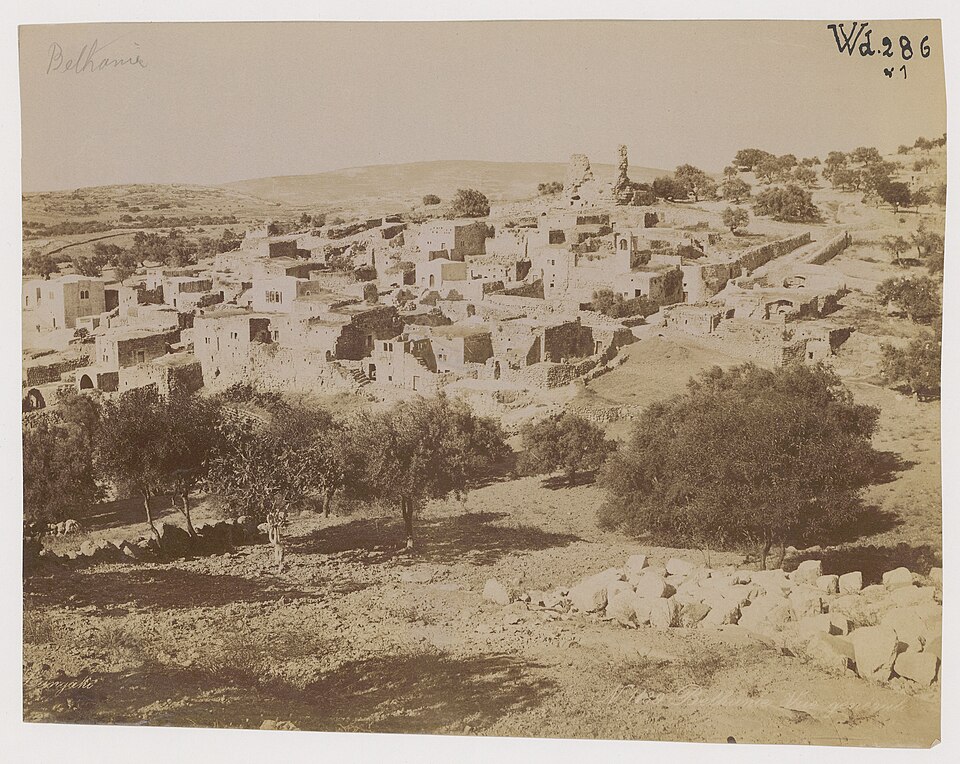
Bethany was a village on the eastern slope of the Mount of Olives; John puts it about fifteen furlongs, some 3 km, from the city. It is the town now called al-Eizariya, a name that comes from Lazarus. Little is known of the village before the Gospels. Some scholars have identified it with Ananiah, a town of Benjamin resettled after the exile, while others place Ananiah at Beit Hanina, north of Jerusalem.
In the Gospels Bethany is the town of Lazarus and his sisters Mary and Martha. After Lazarus died, Jesus came when he had already lain in the grave four days, and raised him. Six days before the Passover he supped there, and Mary anointed his feet; Matthew and Mark tell of an anointing in the house of Simon the leper in Bethany. During his last week in Jerusalem Jesus lodged in Bethany, and he came to the city from Bethphage and Bethany at the Mount of Olives. After the resurrection, Luke says, he led the disciples out as far as to Bethany, blessed them and was parted from them.
In the early fourth century Eusebius describes Bethany as a village two miles from Jerusalem, where the place of Lazarus was still shown; Jerome's Latin version of about 390 adds that a church had been built there. In the 380s the pilgrim Egeria calls it the Lazarium and tells how, on the Saturday before Palm Sunday, the people of Jerusalem went out to it, stopping at a church on the road where Mary had met the Lord, until the crowds filled the fields around. Jerome writes that Paula visited the tomb of Lazarus and the house of Mary and Martha.
Franciscan excavations led by Sylvester Saller in 1949–1953 uncovered remains of the village and of successive churches beside the tomb. The first, a basilica of the late fourth century, was later destroyed and replaced by a larger church, and the cave venerated as the tomb of Lazarus has remained a place of pilgrimage. The Arabic name of the town keeps the memory of the Lazarium.
Scripture: John 11:1; John 11:17–18; John 11:38–44; John 12:1–8; Matt 26:6–13; Mark 14:3–9; Matt 21:17; Mark 11:1; Mark 11:11–12; Luke 19:29; Luke 24:50–51; Neh 11:32
Sources
- Eusebius, Onomasticon, s.v. Bethania, with Jerome's Latin additions (C. U. Wolf's translation, no. 289)
- Egeria, Itinerarium 29.3-6
- Jerome, Letter 108.12
- S. J. Saller, Excavations at Bethany (1949-1953) (1957)
- J. Murphy-O'Connor, The Holy Land: An Oxford Archaeological Guide (5th ed., 2008)
Checked against its sources; not yet read by a historian.
Verses (12)
- Matt 21:17
- And he left them, and went out of the city into Bethany; and he lodged there.
- Matt 26:6
- Now when Jesus was in Bethany, in the house of Simon the leper,
- Mark 11:1
- And when they came nigh to Jerusalem, unto Bethphage and Bethany, at the mount of Olives, he sendeth forth two of his disciples,
- Mark 11:11
- And Jesus entered into Jerusalem, and into the temple: and when he had looked round about upon all things, and now the eventide was come, he went out unto Bethany with the twelve.
- Mark 11:12
- And on the morrow, when they were come from Bethany, he was hungry:
- Mark 14:3
- And being in Bethany in the house of Simon the leper, as he sat at meat, there came a woman having an alabaster box of ointment of spikenard very precious; and she brake the box, and poured it on his head.
- Luke 19:29
- And it came to pass, when he was come nigh to Bethphage and Bethany, at the mount called the mount of Olives, he sent two of his disciples,
- Luke 24:50
- And he led them out as far as to Bethany, and he lifted up his hands, and blessed them.
- John 11:1
- Now a certain man was sick, named Lazarus, of Bethany, the town of Mary and her sister Martha.
- John 11:17
- Then when Jesus came, he found that he had lain in the grave four days already.
- John 11:18
- Now Bethany was nigh unto Jerusalem, about fifteen furlongs off:
- John 12:1
- Then Jesus six days before the passover came to Bethany, where Lazarus was which had been dead, whom he raised from the dead.
King James Version