 History Globe
island
Crete
Events
- AD 961Nikephoros Phokas takes Chandax and returns Crete to Byzantium
In ancient writers
- Homer, Odyssey 19.172–179 — Crete is a fair rich land in the wine-dark sea with countless people and ninety cities of mixed tongues, Achaeans, Cretans, Cydonians, Dorians and Pelasgians; among them the great city Knossos, where Minos reigned.
- Strabo, Geography 10.4.7 — Crete has many cities, the greatest being Knossos, Gortyn and Cydonia; Knossos, celebrated by Homer as the palace of Minos, long held first place, lost it to Gortyn and Lyctus, then regained its rank as capital.
History
Crete, the largest of the Greek islands, stretches some 260 km from east to west and closes the Aegean Sea on the south. In the Bronze Age it was the home of the Minoan civilisation: the first palace at Knossos was built about 1900 BC, and others stood at Phaistos and Malia. Arthur Evans began large-scale excavations at Knossos in 1900. In the last palace period Greek-speaking Mycenaeans kept the accounts in the Linear B script, and the palace of Knossos was destroyed about 1350 BC by the conventional dating, though some scholars put its end later.
The Bible names Caphtor as the land from which the Philistines came: Amos says that God brought up "the Philistines from Caphtor", and Jeremiah calls them "the remnant of the country of Caphtor". Caphtor is often linked with the Keftiu of Egyptian texts and the Kaptara of cuneiform ones and identified with Crete, but this is disputed, and Cyprus and Cilicia have also been proposed. Zephaniah's woe on "the nation of the Cherethites" on the sea coast, in the land of the Philistines, uses a Hebrew name that the Greek Septuagint renders "Cretans".
Cretes were among those who heard the apostles at Pentecost, and Philo counts Crete among the islands full of Jewish settlements. On the voyage to Rome Paul's ship sailed under Crete off Salmone and reached the Fair Havens near Lasea. Paul advised them to stay, but most were for sailing on to winter at Phenice, "an haven of Crete", until the tempestuous wind Euroclydon drove the ship out to sea. In his letter to Titus, Paul says he left him in Crete to "ordain elders in every city", and quotes a prophet of their own: "The Cretians are alway liars, evil beasts, slow bellies". Clement of Alexandria names the poet as Epimenides.
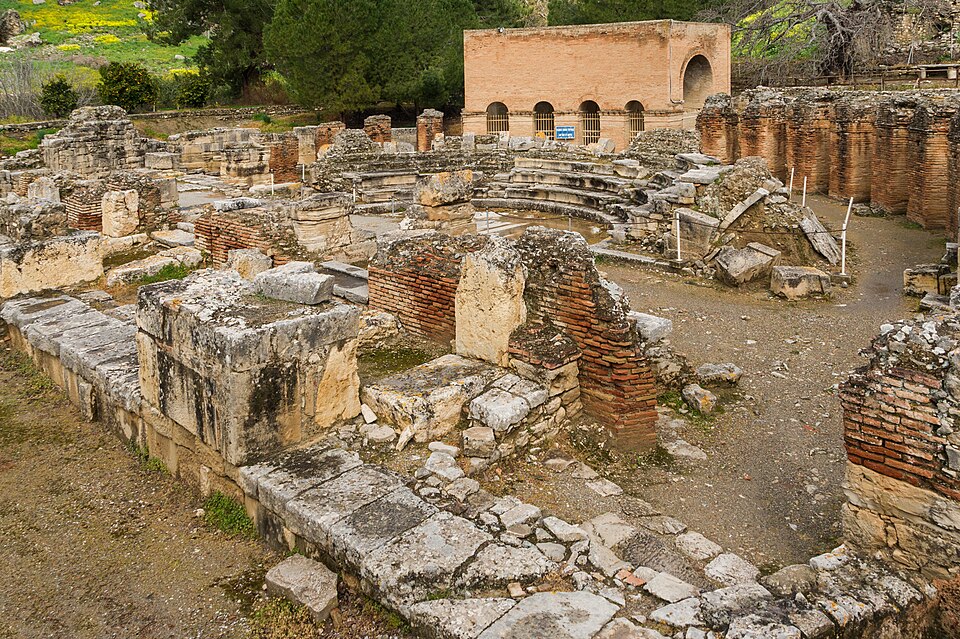
Rome conquered Crete between 69 and 67 BC: Quintus Caecilius Metellus subdued the whole island and took the name Creticus. Under Augustus Crete and Cyrenaica on the African coast formed one senatorial province, with its capital at Gortyn. Eusebius records that Titus was the first to receive the oversight of the churches in Crete. About AD 298 Diocletian made Crete a province of its own, still governed from Gortyn.
Scripture: Gen 10:14; Deut 2:23; Jer 47:4; Amos 9:7; Zeph 2:5; Acts 2:11; Acts 27:7–8; Acts 27:9–15; Acts 27:21; Titus 1:5; Titus 1:12–13
Sources
- Philo, Embassy to Gaius 282
- Septuagint, Zephaniah 2:5 (paroikoi Kreton)
- Clement of Alexandria, Stromata 1.14 (Epimenides as the prophet of Titus 1:12)
- Cassius Dio, Roman History 36.17a-19 (Metellus and the Cretan war); 53.12.4 (Crete and Cyrenaica a senatorial province)
- Eusebius, Church History 3.4.6 (Titus and the churches in Crete)
- J. Strange, Caphtor/Keftiu: A New Investigation (1980)
- J. L. Fitton, Minoans (2002)
- I. F. Sanders, Roman Crete (1982)
Checked against its sources; not yet read by a historian.
Verses (9)
- Zeph 2:5
- Woe unto the inhabitants of the sea coast, the nation of the Cherethites! the word of the LORD is against you; O Canaan, the land of the Philistines, I will even destroy thee, that there shall be no inhabitant.
- Acts 27:7
- And when we had sailed slowly many days, and scarce were come over against Cnidus, the wind not suffering us, we sailed under Crete, over against Salmone;
- Acts 27:8
- And, hardly passing it, came unto a place which is called The fair havens; nigh whereunto was the city of Lasea.
- Acts 27:12
- And because the haven was not commodious to winter in, the more part advised to depart thence also, if by any means they might attain to Phenice, and there to winter; which is an haven of Crete, and lieth toward the south west and north west.
- Acts 27:13
- And when the south wind blew softly, supposing that they had obtained their purpose, loosing thence, they sailed close by Crete.
- Acts 27:14
- But not long after there arose against it a tempestuous wind, called Euroclydon.
- Acts 27:21
- But after long abstinence Paul stood forth in the midst of them, and said, Sirs, ye should have hearkened unto me, and not have loosed from Crete, and to have gained this harm and loss.
- Titus 1:5
- For this cause left I thee in Crete, that thou shouldest set in order the things that are wanting, and ordain elders in every city, as I had appointed thee:
- Titus 1:12
- One of themselves, even a prophet of their own, said, The Cretians are alway liars, evil beasts, slow bellies.
King James Version