 History Globe
town or village
Dibon
- Today Tall Dhiban
Events
- c. 840 BCMesha, king of Moab, sets up his stele at Dibon
History
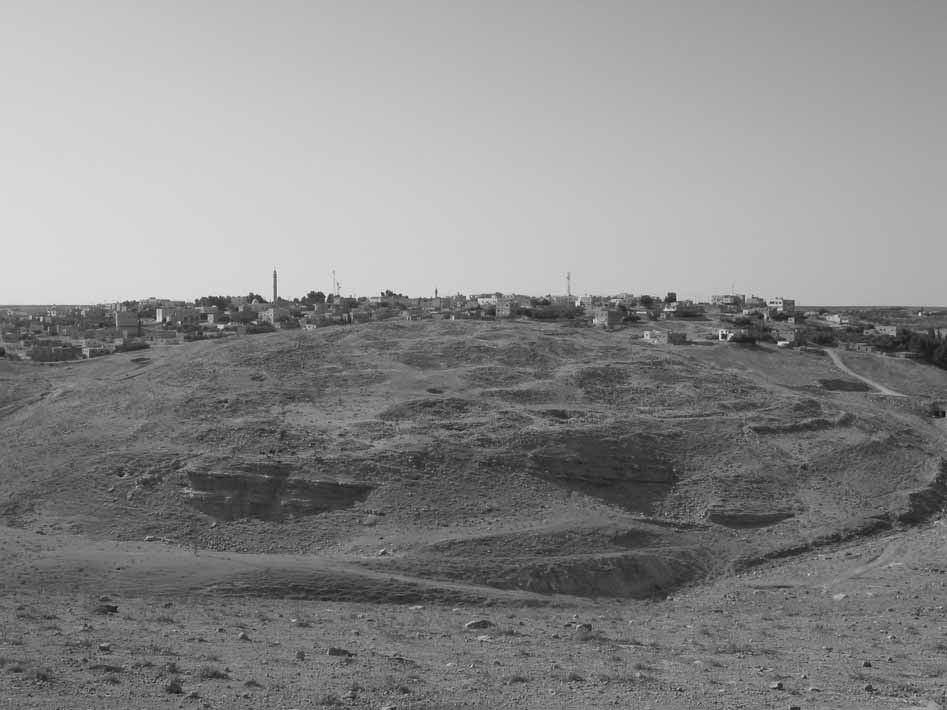
Dibon lay in Moab, east of the Dead Sea and a few kilometres north of the Arnon gorge, on a mound beside the modern town of Dhiban in Jordan, where the King's Highway passed. Excavations by the American Schools of Oriental Research in the 1950s and, since 2004, by the Dhiban Excavation and Development Project have found traces of settlement in the Early Bronze Age, in the third millennium BC, and a sizeable town of the Iron Age.
In Numbers, the old song about Heshbon, the city of Sihon, king of the Amorites, says that "Heshbon is perished even unto Dibon"; Israel then took the land, the children of Gad built Dibon, and on the way through the wilderness Israel camped at Dibon-gad. Joshua assigns Dibon to Reuben. In Isaiah and Jeremiah it is again a town of Moab, mourning in the oracles against that land.
In August 1868 the missionary F. A. Klein was shown a basalt stele lying among the ruins of Dhiban. Before it could be taken away, local Bedouin broke it to pieces, but a paper squeeze made for Charles Clermont-Ganneau allowed the text to be restored, and the stone is now in the Louvre. In it Mesha, king of Moab, the Dibonite, says that Omri, king of Israel, and his son had oppressed Moab, that he took back the land, captured Ataroth and Nebo, and in Qarhoh, usually taken to be the royal quarter of Dibon, built walls, gates, towers, a palace and reservoirs, with Israelite prisoners put to the digging. 2 Kings tells how Mesha rebelled against Israel after the death of Ahab.
Little is known of Dibon in the Persian and Hellenistic periods. From the middle of the first century BC it belonged to the Nabataeans, who built a temple there, and in AD 106 it passed with the rest of the Nabataean kingdom into the Roman province of Arabia. Early in the fourth century Eusebius knew Dibon as a very large village near the Arnon. Excavations have uncovered a bath house and two churches of the late Roman and Byzantine periods.
Scripture: Num 21:26–30; Num 32:34; Num 33:45–46; Josh 13:9; Josh 13:15–17; Isa 15:2; Jer 48:18; Jer 48:22; 2 Kgs 3:4–5
Sources
- The Mesha Stele (KAI 181), lines 1-9 (Mesha the Dibonite; Omri and his son), 10-21 (Ataroth, Nebo), 21-28 (building at Qarhoh)
- F. A. Klein, letter of 23 March 1870 on the discovery of the stele, Pall Mall Gazette, 19 April 1870
- Eusebius, Onomasticon, s.v. Daibon (Dibon)
- F. V. Winnett, 'Excavations at Dibon in Moab, 1950-51', BASOR 125 (1952) 7-20; A. D. Tushingham, 'Excavations at Dibon in Moab, 1952-53', BASOR 133 (1954) 6-26
- B. Porter, B. Routledge, D. Steen and F. al-Kawamlha, 'The Power of Place: The Dhiban Community through the Ages', in T. E. Levy et al. (eds.), Crossing Jordan: North American Contributions to the Archaeology of Jordan (London, 2016) 315-322
- J. A. Dearman (ed.), Studies in the Mesha Inscription and Moab (1989)
- B. Routledge, Moab in the Iron Age: Hegemony, Polity, Archaeology (2004)
Checked against its sources; not yet read by a historian.
Verses (10)
- Num 21:30
- We have shot at them; Heshbon is perished even unto Dibon, and we have laid them waste even unto Nophah, which reacheth unto Medeba.
- Num 32:3
- Ataroth, and Dibon, and Jazer, and Nimrah, and Heshbon, and Elealeh, and Shebam, and Nebo, and Beon,
- Num 32:34
- And the children of Gad built Dibon, and Ataroth, and Aroer,
- Num 33:45
- And they departed from Iim, and pitched in Dibon-gad.
- Num 33:46
- And they removed from Dibon-gad, and encamped in Almon-diblathaim.
- Josh 13:9
- From Aroer, that is upon the bank of the river Arnon, and the city that is in the midst of the river, and all the plain of Medeba unto Dibon;
- Josh 13:17
- Heshbon, and all her cities that are in the plain; Dibon, and Bamoth-baal, and Beth-baal-meon,
- Isa 15:2
- He is gone up to Bajith, and to Dibon, the high places, to weep: Moab shall howl over Nebo, and over Medeba: on all their heads shall be baldness, and every beard cut off.
- Jer 48:18
- Thou daughter that dost inhabit Dibon, come down from thy glory, and sit in thirst; for the spoiler of Moab shall come upon thee, and he shall destroy thy strong holds.
- Jer 48:22
- And upon Dibon, and upon Nebo, and upon Beth-diblathaim,
King James Version