 History Globe
town or village
Paphos
- Today New Paphos
Lifetime: c. 320 BC – …
New Paphos, the harbour city of Acts, was founded by Nicocles, the last king of Old Paphos, in the late 4th century BC.
History
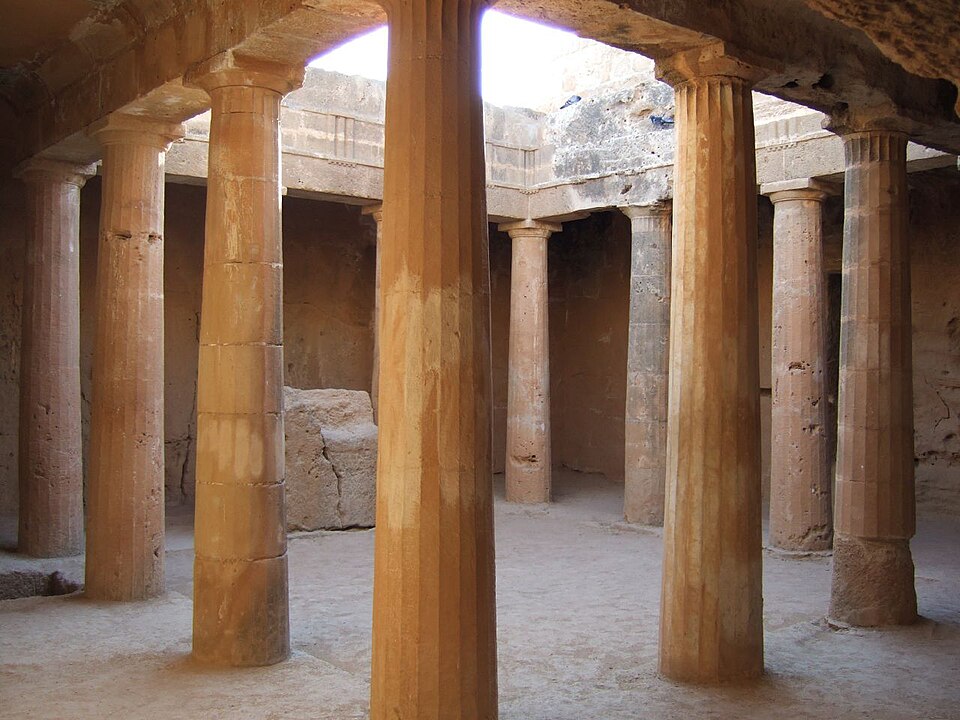
The Paphos of Acts is New Paphos, the harbour city on the south-west coast of Cyprus, at modern Kato Paphos. Strabo puts Old Paphos, now Kouklia, sixty stadia away by land; there stood the ancient sanctuary of the Paphian Aphrodite, whose image, Tacitus notes, was not a human figure but a rounded cone of stone. Old Paphos was the seat of one of the island's kingdoms: about 673 BC the Assyrian king Esarhaddon listed Ituandar, king of Paphos, among the ten kings of Cyprus.
New Paphos was founded near the end of the fourth century BC, probably by Nicocles, the last king of Paphos; Strabo gives the legendary Agapenor as its founder. Under the later Ptolemies it became the seat of government of Cyprus, and it kept that role after Rome annexed the island in 58 BC. Each year men and women from the other cities walked in procession along the road to the old sanctuary. After an earthquake in 15 BC Augustus gave the Paphians money and allowed them to call their city Augusta.
Barnabas and Saul crossed the island from Salamis to Paphos. There the proconsul Sergius Paulus, whom Acts calls "a prudent man", called for them and wished to hear the word of God, but the sorcerer Bar-jesus, called Elymas, tried to turn him away from the faith. Saul, "who also is called Paul", declared that the hand of the Lord was upon him, and he was blind for a season; the proconsul believed. From here on Acts calls the apostle Paul, and from Paphos the company sailed to Perga in Pamphylia.
In AD 69 Titus, on his way back to his father's army in the east, turned aside to see the temple of the Paphian Venus, and Tacitus describes its rites. The great houses of Roman Paphos, among them the Houses of Dionysus, Theseus and Aion, have mosaic floors of the late second to fifth centuries that are among the finest in the eastern Mediterranean. In the fourth century, after earthquakes, the capital passed to Salamis, rebuilt as Constantia.
Scripture: Acts 13:4–6; Acts 13:7–12; Acts 13:13
Sources
- Strabo, Geography 14.6.3 (Old and New Paphos, Agapenor, the annual procession)
- Esarhaddon, Nineveh prism A (RINAP 4, Esarhaddon 1) v 66: Ituandar, king of Paphos
- Cassius Dio, Roman History 54.23.7 (earthquake; the name Augusta)
- Tacitus, Histories 2.2-3 (Titus at the temple of the Paphian Venus)
- F. G. Maier and V. Karageorghis, Paphos: History and Archaeology (1984)
- T. B. Mitford, 'Roman Cyprus', ANRW II.7.2 (1980)
Checked against its sources; not yet read by a historian.
Verses (2)
- Acts 13:6
- And when they had gone through the isle unto Paphos, they found a certain sorcerer, a false prophet, a Jew, whose name was Bar-jesus:
- Acts 13:13
- Now when Paul and his company loosed from Paphos, they came to Perga in Pamphylia: and John departing from them returned to Jerusalem.
King James Version