 History Globe
town or village
Ptolemais
- Today Acre
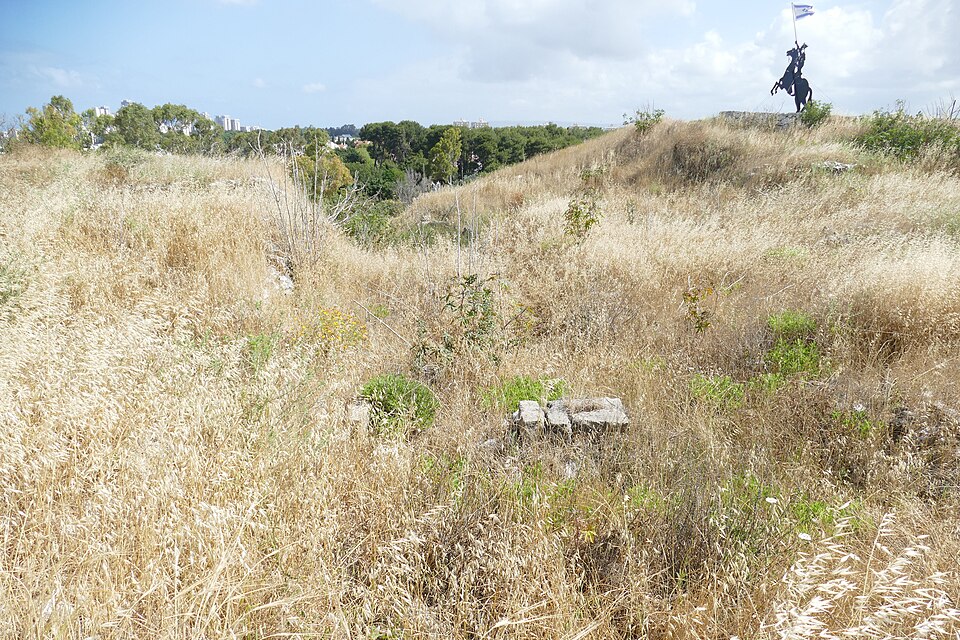
Lifetime: … – AD 1291
The last Crusader stronghold, taken by the Mamluk sultan al-Ashraf Khalil in 1291 and razed on purpose so that the Franks could not use it again; it lay in ruins until the Ottoman revival of the 18th century.
Events
- AD 1104Baldwin I takes Acre with a Genoese fleet
- AD 1191The Third Crusade retakes Acre after a two-year siege
- AD 1291The Mamluks take Acre, the last great crusader stronghold in the Holy Land
History
Ptolemais, the Acco of the Old Testament, lies at the northern end of the bay that Mount Carmel closes on the south, on the coast road between Tyre and Caesarea. The Bronze and Iron Age town stood on the mound of Tel Akko, a little inland; in the Hellenistic age the city spread onto the small peninsula where the old city of Acre stands today. In the Amarna letters of the fourteenth century BC its ruler Satatna writes to the pharaoh, and a king of Babylon complains that men sent by Satatna and another ruler had killed Babylonian merchants in Canaan.
Judges counts Accho among the towns whose inhabitants the tribe of Asher did not drive out. In 701 BC Sennacherib of Assyria lists Acco among the fortified cities of Luli, king of Sidon, that bowed at his feet. Under the Persians it was a base against Egypt: in the 370s BC, Diodorus says, the army sent to reconquer Egypt gathered at Ace. In the third century BC, under Ptolemy II, the city was renamed Ptolemais. In 219 BC its Ptolemaic commander handed it to Antiochus III, and from about 200 BC it stayed with the Seleucids. According to 1 Maccabees, about 150 BC Alexander Balas married Cleopatra, daughter of Ptolemy, at Ptolemais, and later, when Jonathan Maccabeus came into Ptolemais, its people shut the gates, seized him and put his men to the sword.
At the end of Paul's third journey he and his companions sailed from Tyre to Ptolemais, "and saluted the brethren, and abode with them one day", then went on to Caesarea. Under Claudius the city became a Roman colony; Pliny calls it a colony of Claudius Caesar, once called Acce, and, like Josephus, tells of the river Belus nearby, whose sand was used for glass. In AD 67 Vespasian came to Ptolemais at the start of the war in Galilee, and the people of Sepphoris, who sided with Rome, met him there.
A church at Ptolemais is attested again about AD 190: Eusebius names Clarus of Ptolemais, with Narcissus of Jerusalem, Theophilus of Caesarea and Cassius of Tyre, among the bishops who wrote on the keeping of Easter. The city remained an important port under Roman and Byzantine rule until the Arab conquest in the seventh century, when its old name, as Akka, came back into use.
Scripture: Judg 1:31; Acts 21:7–8
Sources
- Amarna letters EA 8; EA 233-235 (W. L. Moran, The Amarna Letters, 1992)
- Sennacherib's annals, Chicago Prism (RINAP 3, Sennacherib 22) ii 37-45
- Diodorus Siculus, Library 15.41.3
- Strabo, Geography 16.2.25
- Polybius, Histories 5.61-62
- 1 Maccabees 10:57-58; 12:45-48
- Pliny, Natural History 5.75
- Josephus, Jewish War 2.188-191; 3.29-30
- Eusebius, Church History 5.23.3; 5.25
- M. Dothan, 'Acco', in E. Stern (ed.), The New Encyclopedia of Archaeological Excavations in the Holy Land, vol. 1 (1993)
- Y. Aharoni, The Land of the Bible: A Historical Geography (rev. ed., 1979)
Checked against its sources; not yet read by a historian.
Verses (1)
- Acts 21:7
- And when we had finished our course from Tyre, we came to Ptolemais, and saluted the brethren, and abode with them one day.
King James Version