 History Globe
town or village
Philadelphia
- Today Alaşehir
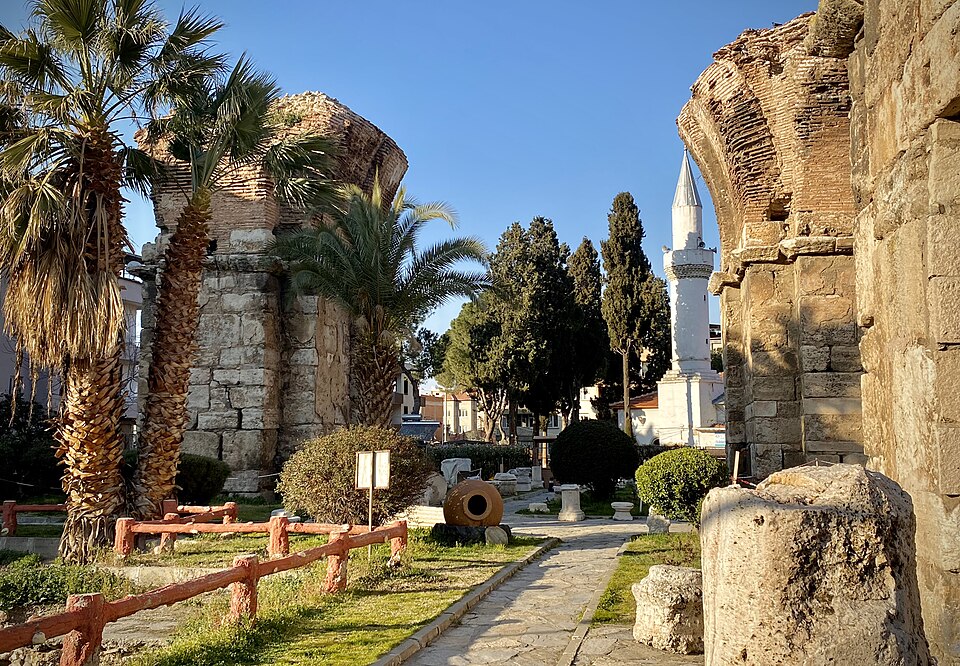
History
Philadelphia, today's Alaşehir, lay in eastern Lydia at the foot of Mount Tmolus, above the valley of the Cogamis, a tributary of the Hermus, on the road from Sardis into Phrygia. It was founded in the second century BC by the Attalid kings of Pergamum and named after Attalus II Philadelphus, "the one who loves his brother"; some credit the founding to his brother Eumenes II, others to Attalus himself. With the rest of the Attalid kingdom it passed to Rome in 133 BC.
The city stood on the edge of the volcanic land the Greeks called the Burnt Country, and Strabo describes it as ever subject to earthquakes: its walls cracked day after day, so that few people lived in the city and most farmed the fertile countryside. The great earthquake of AD 17 struck Philadelphia among twelve cities of Asia, and Tiberius freed them from tribute for five years. For a time in the first century its coins call it Neocaesarea.
In Revelation the letter to Philadelphia, like that to Smyrna, has no rebuke. It opens: "These things saith he that is holy, he that is true, he that hath the key of David, he that openeth, and no man shutteth". The church is told: "I have set before thee an open door, and no man can shut it: for thou hast a little strength, and hast kept my word." To him that overcomes it promises: "Him that overcometh will I make a pillar in the temple of my God, and he shall go no more out".
Early in the second century, by the usual dating, Ignatius of Antioch passed through Philadelphia under guard on his way to Rome. Writing back from Troas, he reminded the church that while among them he had cried with a loud voice: give heed to the bishop, the presbyters and the deacons. The account of Polycarp's death calls him the twelfth martyr at Smyrna, counting those from Philadelphia, and an early writer against the Montanists, quoted by Eusebius, counts Ammia of Philadelphia among the true prophets of the new covenant.
Scripture: Rev 1:11; Rev 3:7–13
Sources
- Strabo, Geography 12.8.18; 13.4.10-11
- Tacitus, Annals 2.47
- Ignatius, Letter to the Philadelphians 7.1; 11.2
- Martyrdom of Polycarp 19.1
- Eusebius, Church History 5.17.2-4 (Ammia)
- W. M. Ramsay, The Letters to the Seven Churches of Asia (1904)
- C. J. Hemer, The Letters to the Seven Churches of Asia in Their Local Setting (1986)
Checked against its sources; not yet read by a historian.
Verses (2)
- Rev 1:11
- Saying, I am Alpha and Omega, the first and the last: and, What thou seest, write in a book, and send it unto the seven churches which are in Asia; unto Ephesus, and unto Smyrna, and unto Pergamos, and unto Thyatira, and unto Sardis, and unto Philadelphia, and unto Laodicea.
- Rev 3:7
- And to the angel of the church in Philadelphia write; These things saith he that is holy, he that is true, he that hath the key of David, he that openeth, and no man shutteth; and shutteth, and no man openeth;
King James Version