 History Globe
town or village
Sardis
Events
- c. 547 BCCyrus defeats Croesus and takes Sardis
- 498 BCThe Ionians, with Athenian and Eretrian help, burn Sardis
In ancient writers
- Herodotus, Histories 1.84 — After a fourteen-day siege Cyrus took Sardis when a Mardian soldier climbed the sheer, unguarded side of the acropolis, the one stretch King Meles had never carried his lion around.
- Strabo, Geography 13.4.5 — Sardis, the ancient royal seat of the Lydians, has a strong citadel; above it rises Tmolus, from which flows the Pactolus, once rich in gold dust that made the wealth of Croesus proverbial, though no gold is found there now.
- Tacitus, Annals 2.47 — In AD 17 a night earthquake destroyed twelve famous cities of Asia; Sardis suffered worst, and Tiberius promised it ten million sesterces and remitted its taxes for five years.
History
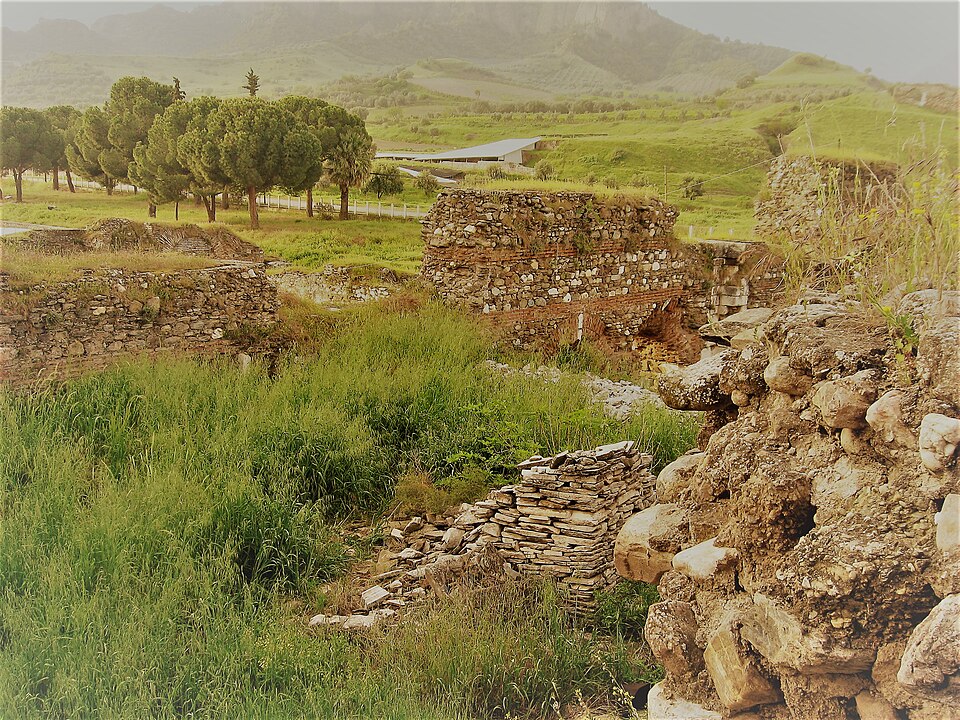
Sardis lay in western Asia Minor, by today's village of Sart, where the Pactolus stream comes down from Mount Tmolus into the valley of the Hermus. A steep citadel rose above the lower city. The site was lived on in the Bronze Age, but Sardis grew great as the royal city of Lydia, whose kings of the Mermnad house, from Gyges to Croesus, ruled much of western Asia Minor in the seventh and sixth centuries BC. The Pactolus once carried gold dust, Strabo says, and Herodotus calls the Lydians the first people known to strike coins of gold and silver.
Cyrus of Persia took Sardis from Croesus, usually dated about 547 BC; Herodotus tells how a Persian soldier climbed the cliff on the side of the citadel that no one guarded. Sardis became the seat of a Persian satrap and the western end of the Royal Road to Susa. Ionian rebels burned the lower city about 498 BC. In 334 BC it surrendered to Alexander, who let the Lydians keep their ancient laws. About 214 BC Antiochus III took it from the rebel Achaeus, again by scaling an unguarded wall. In AD 17 an earthquake struck twelve cities of Asia, Sardis worst of all, and Tiberius gave it ten million sesterces and five years free of tribute.
Revelation names Sardis fifth of the seven churches of Asia, and its letter is one of the sternest: "I know thy works, that thou hast a name that thou livest, and art dead." It calls the church to watch, or the Lord will come "as a thief", yet it says that a few in Sardis "have not defiled their garments; and they shall walk with me in white". Some identify Sepharad, where exiles from Jerusalem lived according to Obadiah, with Sardis, whose Lydian name was similar; others doubt it.
Roman decrees quoted by Josephus show that the Jews of Sardis had their own assembly and a place to meet in the first century BC. In the late Roman city they used part of the great bath-gymnasium as a synagogue over 50 m long, uncovered by the Harvard-Cornell excavations in 1962; most of its decoration dates from the fourth and fifth centuries. About 170 Melito, bishop of Sardis, addressed an apology to the emperor and wrote On the Passover, and Polycrates of Ephesus named him among the great lights of Asia who lie in Sardis. Sardis remained the chief city of the province of Lydia into the sixth century.
Scripture: Rev 1:11; Rev 3:1–6; Obad 1:20
Sources
- Herodotus, Histories 1.84 (capture by Cyrus); 1.94 (first coinage); 5.52-54 (the Royal Road); 5.100-102 (burning in the Ionian revolt)
- Strabo, Geography 13.4.5; 13.4.8
- Arrian, Anabasis of Alexander 1.17.3-6
- Polybius, Histories 7.15-18
- Tacitus, Annals 2.47
- Josephus, Jewish Antiquities 14.235; 14.259-261
- Eusebius, Church History 4.26.1-2; 5.24.5
- Archaeological Exploration of Sardis (Harvard-Cornell expedition, 1958-), publications and online essays on the synagogue
- G. M. A. Hanfmann, Sardis from Prehistoric to Roman Times (1983)
- C. Foss, Byzantine and Turkish Sardis (1976)
Checked against its sources; not yet read by a historian.
Verses (3)
- Rev 1:11
- Saying, I am Alpha and Omega, the first and the last: and, What thou seest, write in a book, and send it unto the seven churches which are in Asia; unto Ephesus, and unto Smyrna, and unto Pergamos, and unto Thyatira, and unto Sardis, and unto Philadelphia, and unto Laodicea.
- Rev 3:1
- And unto the angel of the church in Sardis write; These things saith he that hath the seven Spirits of God, and the seven stars; I know thy works, that thou hast a name that thou livest, and art dead.
- Rev 3:4
- Thou hast a few names even in Sardis which have not defiled their garments; and they shall walk with me in white: for they are worthy.
King James Version